Handling technology
RFID integration, end-to-end
The adoption of RFID (Radio Frequency Identification) strengthens every stage of the supply chain by enhancing visibility, traceability, and accuracy — from inbound to storage, picking, shipping, and point of sale.
How it Works
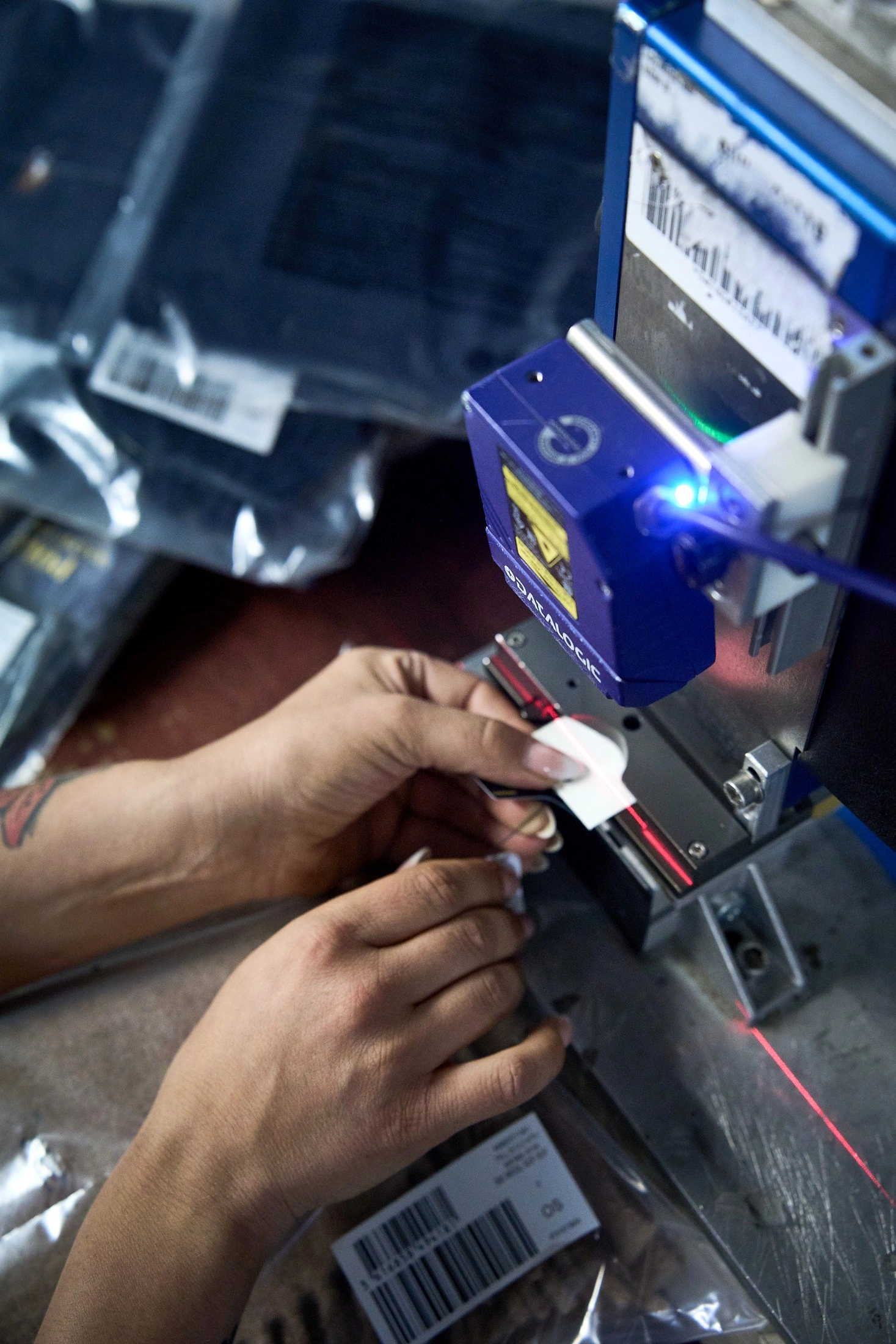
Fully embedded in our processes and integrated with our proprietary WMS, Logistica.Net, RFID enables real-time, contactless control throughout the product lifecycle. Each item is uniquely identified via a passive chip, enabling fast, multi-item scanning without line-of-sight.
This reduces processing time, errors, and manual checks.Inbound: automates validation of shipped vs expected goods, speeds up stock counts, reduces stockouts, and streamlines packing and returns.
Retail & B2C: improves product verification, automated checkout, rapid inventory, returns, and omnichannel flows (e.g. ship-from-store, same-day delivery).
Client-centric technology
RFID is central to the Digital Product Passport (DPP), supporting transparency, traceability, and ESG compliance.
By embedding product details into tags (origin, materials, care, repair, resale), it adds long-term value for both luxury and mass-market brands.Flexible by design (UHF, NFC, dual-frequency), RFID solutions can be adapted to brand needs. We partner with leading suppliers of tags, antennas, readers, and middleware to deliver scalable, fully integrated solutions.
Smarter, faster, more connected logistics
All RFID deployments follow our standards of security, sustainability, and performance. Integration with Logistica.Net ensures end-to-end visibility, while interoperability with ERP, TMS, and retail platforms enables smooth data exchange.
With RFID, logistics becomes smarter, faster, and more connected — improving customer experience and building the foundation for transparent, circular, and sustainable supply chains.
Benefits
1. Real-time traceability
RFID ensures that every item is identified and tracked accurately across the supply chain. Fast, bulk tag reading provides real-time visibility into inventory status, reducing the risk of loss or misplacement and supporting compliance with Digital Product Passport requirements.
2. Faster, more accurate inventory
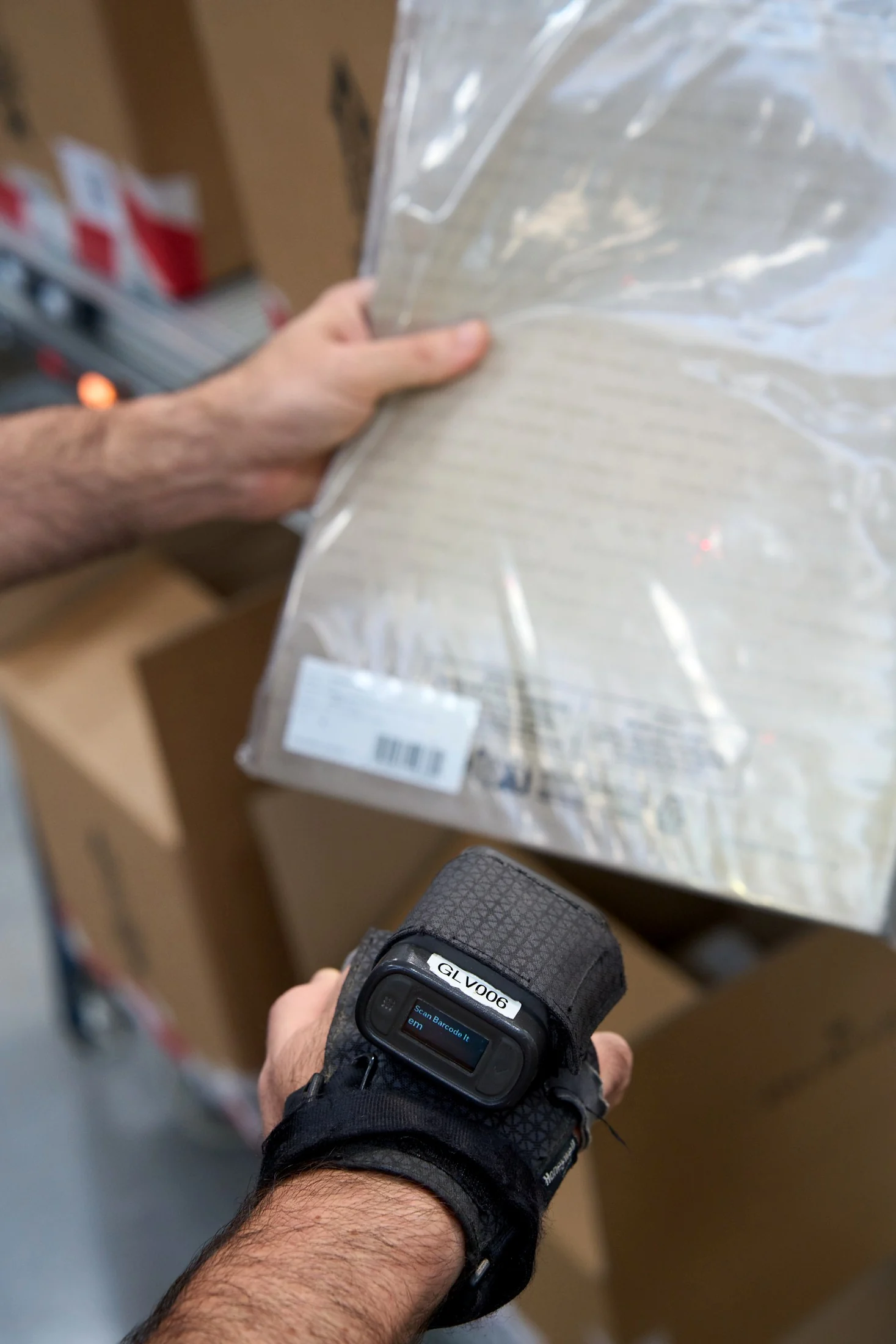
Handheld or fixed RFID readers enable complete inventory counts in minutes — with unmatched accuracy. This ensures constant visibility over stock levels and movement, simplifying updates and reconciliation.
3. Streamlined inbound and outbound flows
RFID automatically verifies the contents of each logistic unit during receiving and shipping, eliminating manual checks and boosting process speed. The result: faster, more reliable operations with better performance tracking.
4. Enabling omnichannel and consumer engagement
RFID supports advanced logistics scenarios like ship-from-store and same-day delivery. It also connects brands with end customers: a quick tag scan gives users access to the Digital Product Passport, including material details, origin, care info, and post-sales services.
5. Security, sustainability and ESG compliance
RFID helps prevent theft, fraud, and tampering by ensuring verifiable item traceability. It also cuts paper and material waste, reduces unnecessary movements, and supports a more sustainable and efficient logistics model — aligned with ESG goals.